PRIMARY SOURCES / FAMILY-STEWARDed RESEARCH

A life, in his
own record.

Photographs, exhibition records, press coverage and letters preserve Henry’s history. Read the summaries or open a record for the detailed account and its qualifications.

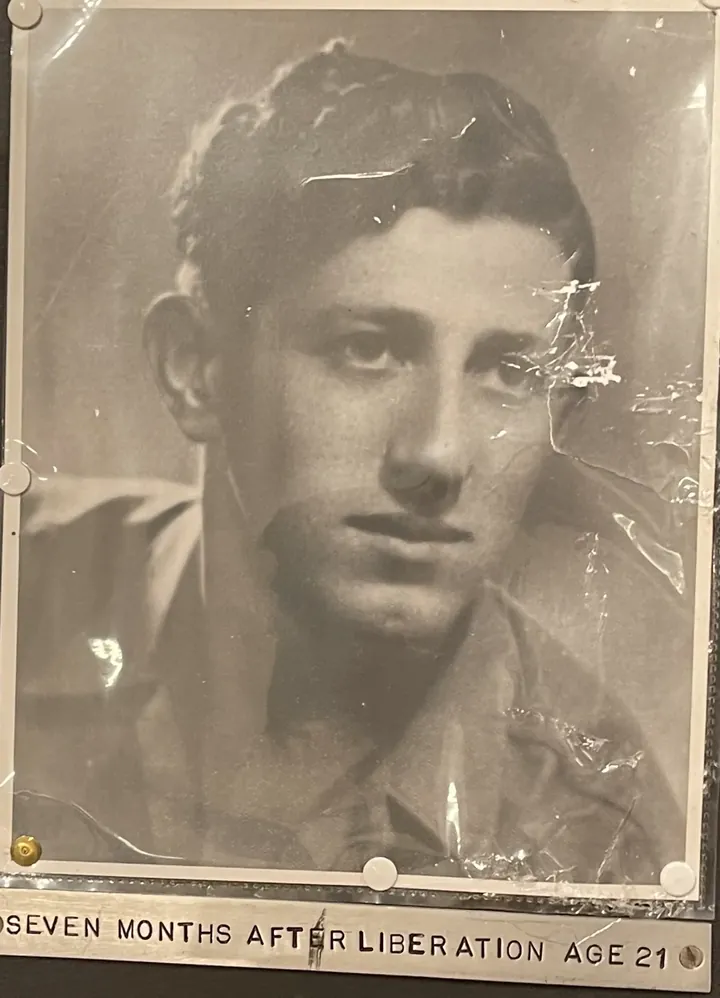
Historical portrait of Henry Friedman after liberation
Original display caption: “Seven months after liberation, age 21”

The person behind the records

Henry after the war.

Henry’s display labels this portrait “Seven months after liberation, age 21.” The wording is preserved as part of his own record.

See more photographs ↗
FROM THE FAMILY PAPERS

The pages he
left behind.

A biography, a speaking-venues list and a newspaper clipping. Select a page to look more closely.

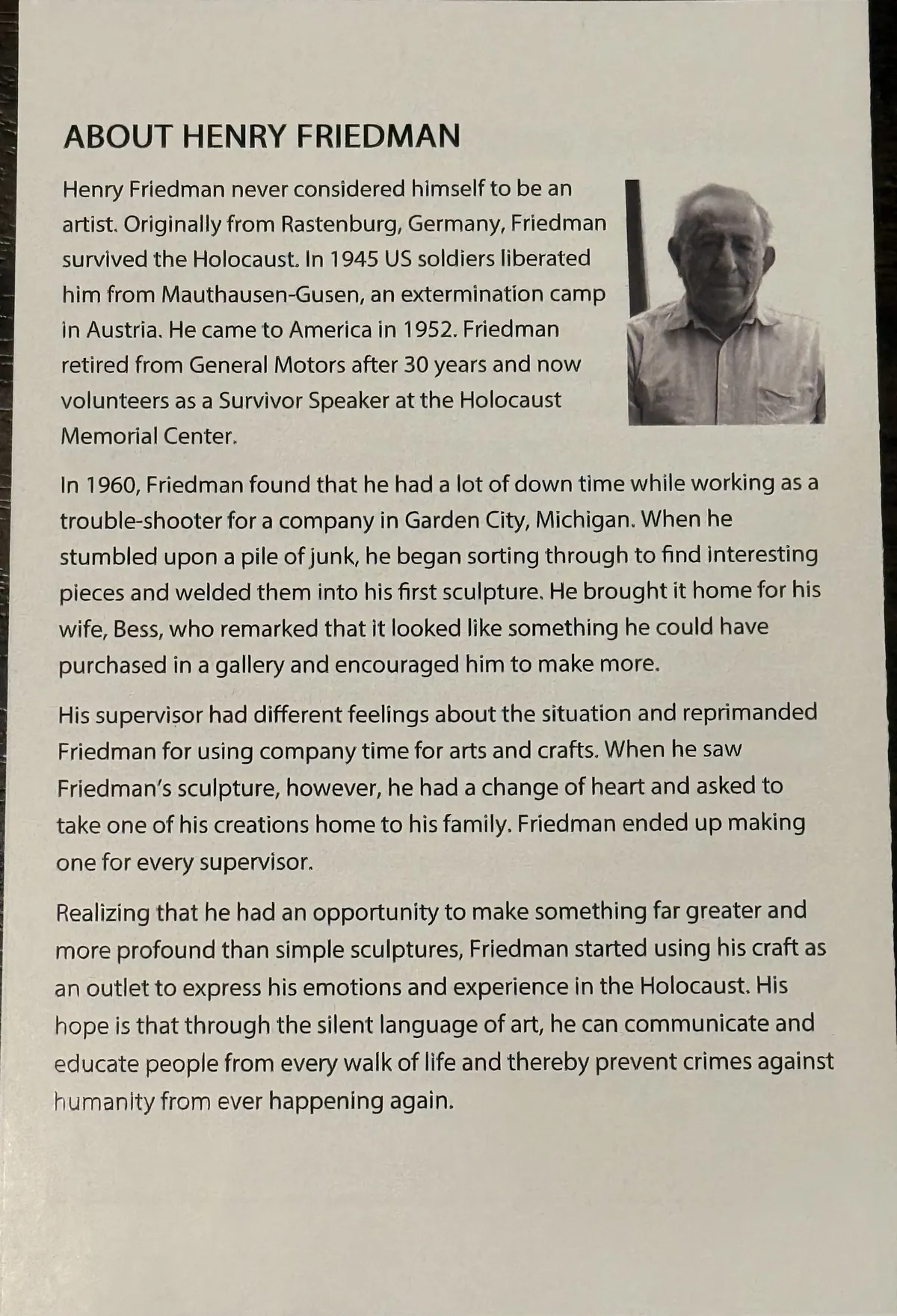
A typed page headed About Henry Friedman
“About Henry Friedman” · Undated family-preserved biography
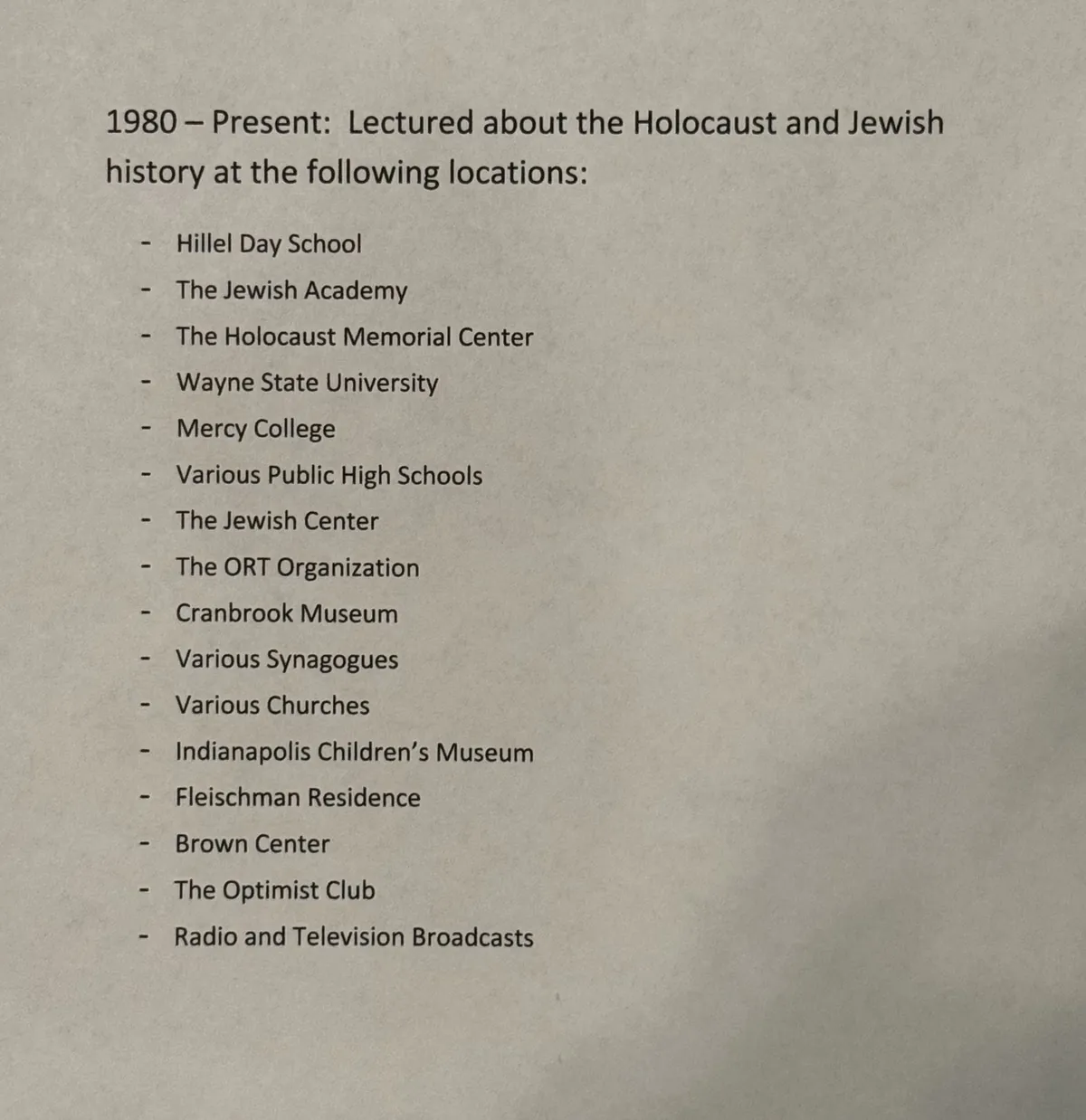
Detail of a typed list of Henry’s Holocaust and Jewish history speaking venues
Speaking venues · Detail; personal contact header excluded
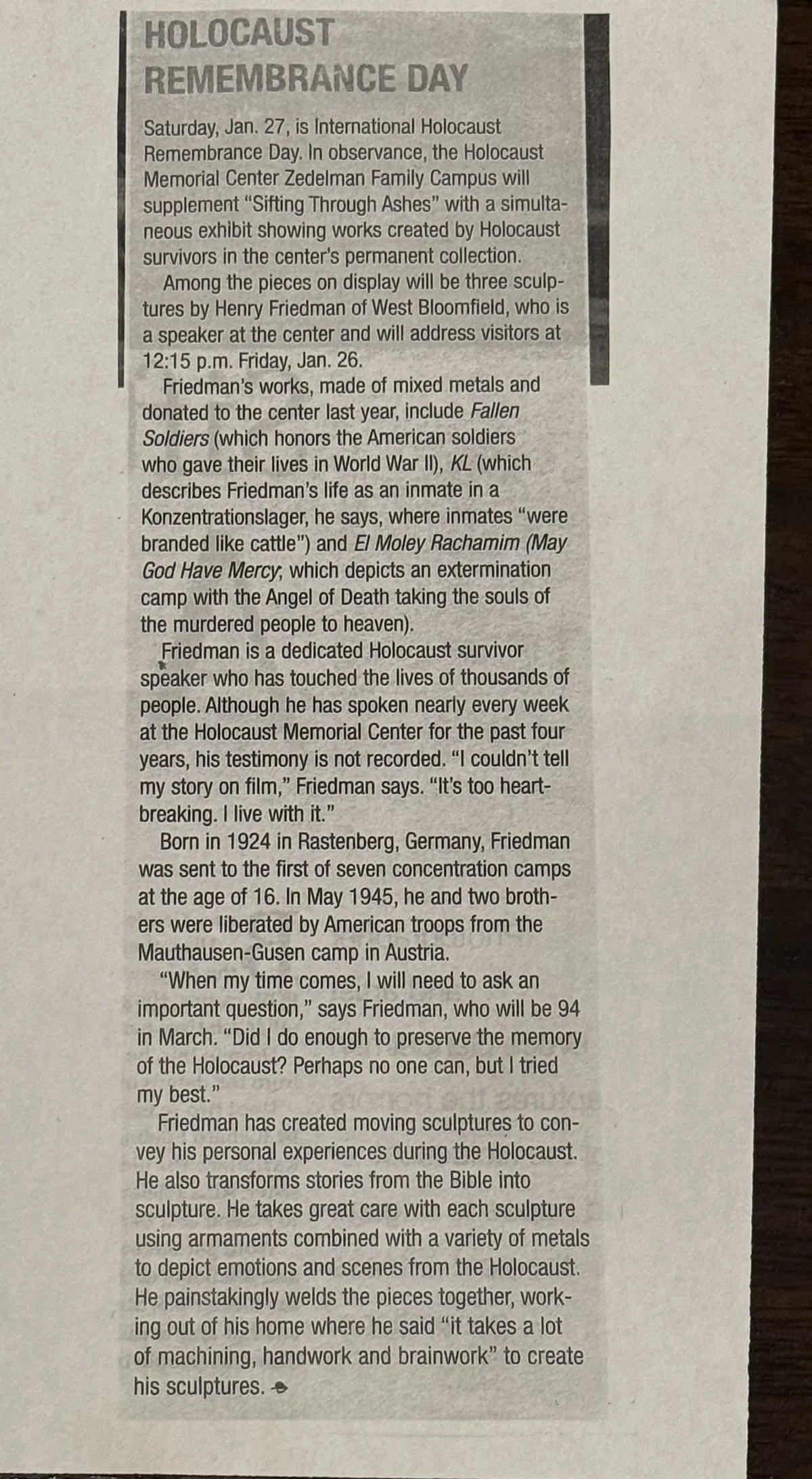
Newspaper clipping headed Holocaust Remembrance Day
“Holocaust Remembrance Day” · Publication date unconfirmed

These are source documents, not independently verified conclusions. Excerpts omit private home contact details; the originals are unchanged.

More from the family archive

Recognition & remembrance.

Newly photographed records document service, community recognition and the public sharing of Henry’s story.

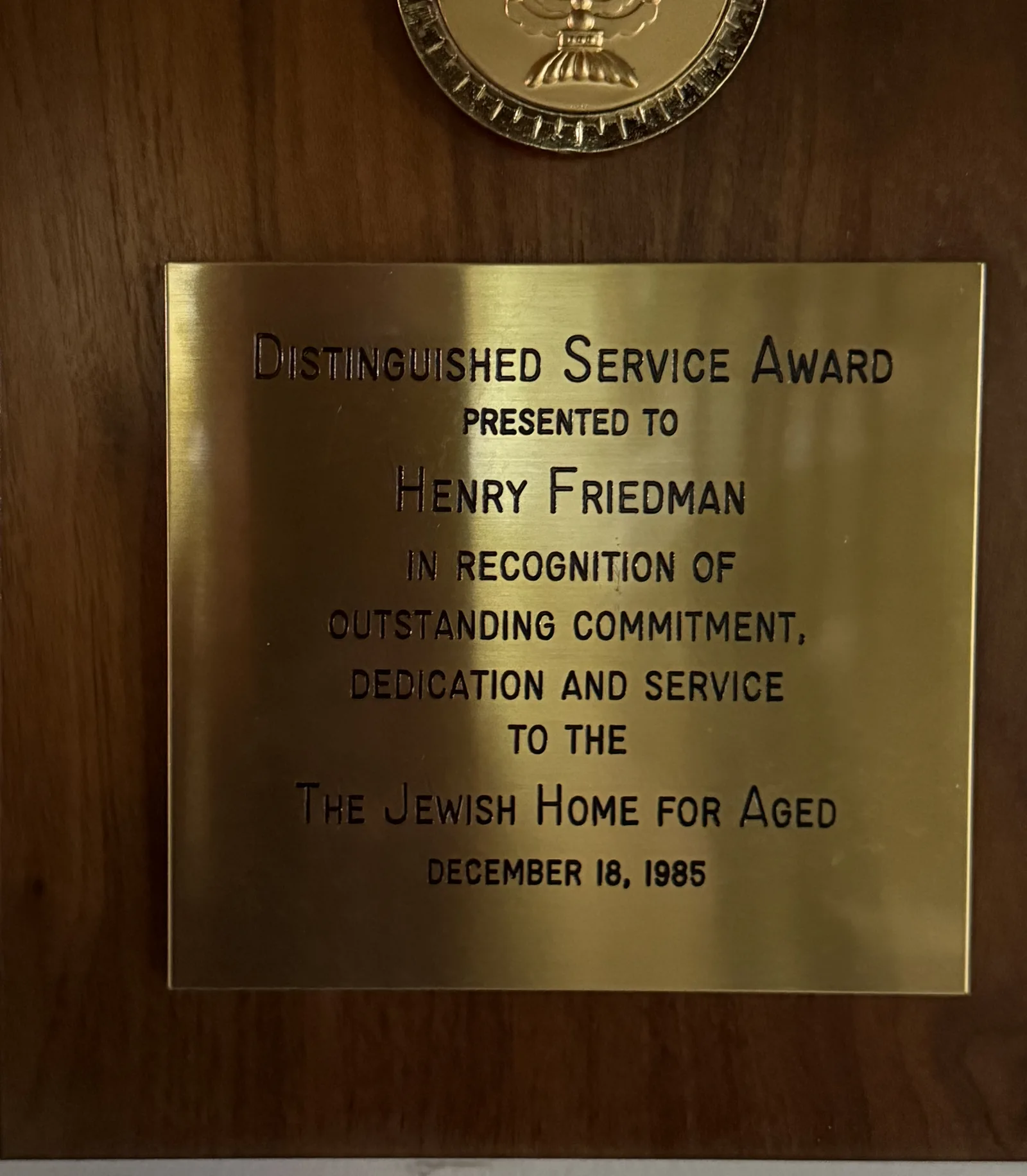
Henry’s Distinguished Service Award plaque from the Jewish Home for Aged
Distinguished Service Award from the Jewish Home for Aged, dated December 18, 1985.
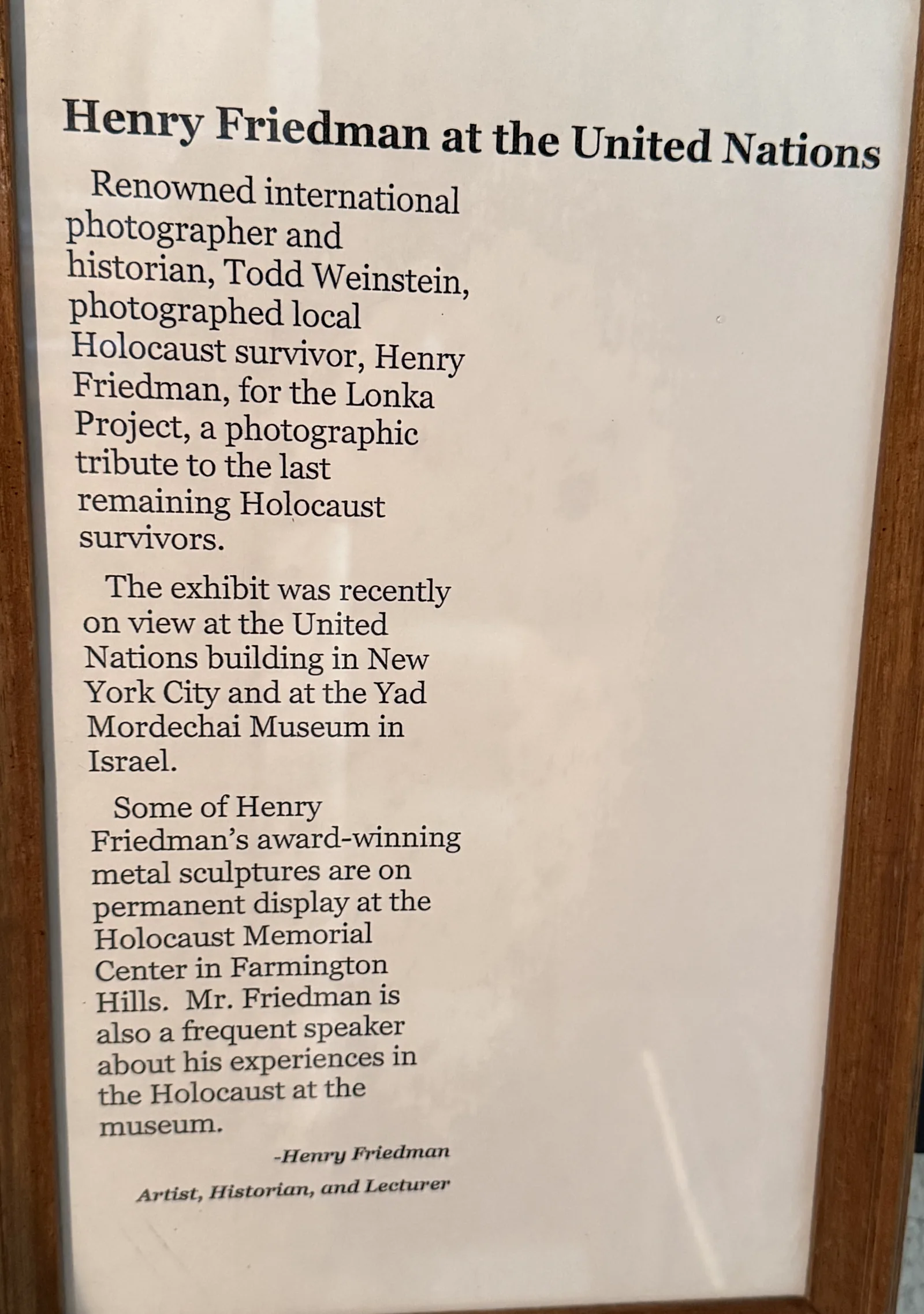
Framed account of Henry’s Lonka Project portrait and the United Nations exhibition
Framed text headed “Henry Friedman at the United Nations.” Publication and date unconfirmed.
Read what these records establish

Service and community

A Distinguished Service Award plaque recognizes Henry’s commitment, dedication and service to the Jewish Home for Aged. It is dated December 18, 1985.

A family-preserved announcement names Henry among the 2008 Eight Over Eighty Tikkun Olam Award honorees of Jewish Apartments & Services. The full announcement includes other people’s portraits and remains in the private archive.

A portrait shared with the world

The framed text headed Henry Friedman at the United Nations identifies Todd Weinstein as the photographer of Henry’s Lonka Project portrait. It describes exhibitions of the wider Lonka Project at the United Nations in New York and the Yad Mordechai Museum in Israel; this record alone does not establish that Henry’s individual portrait appeared at both venues. Its publication and date remain unconfirmed.

Works at the Holocaust Center

The same text describes Henry’s sculptures as being on permanent display at the Holocaust Memorial Center in Farmington Hills. His family confirms that he gifted three works to the institution, now the Zekelman Holocaust Center. These works belong to the Center and are separate from the 38 sculptures in the family’s current collection.

Explore the Center’s online catalog ↗

Explore the original drawings & preserved workshop →

Beyond the family collection

Three works at the Center.

Henry gifted these three sculptures to the Zekelman Holocaust Center. They belong to the Center and are separate from the 38 works in the family collection.

KL

A newspaper account describes armament surrounding a family within a Jewish star, flames, a swastika, a gas chamber, and a hand marked “KL,” representing Henry's own prisoner marking. This is a published description of the work, not a new family attribution.

Fallen Soldiers

A published account describes a memorial to American soldiers killed in World War II, with rifle barrels, a camp scene, Jewish stars, a cross, and an angel carrying souls to heaven. The 1993 exhibition program calls the work Fallen Soldier; a later article uses Fallen Soldiers.

El Moley Rachamim

A published account says Henry first imagined a Jewish cemetery, then developed the composition into an extermination camp, with a Torah scroll, handmade barbed wire, and an angel carrying souls to heaven. The article attributes to Henry the statement, “An extermination camp is a Jewish cemetery.”

Titles and descriptions follow a family-preserved article about the Center’s Sifting Through Ashes exhibition. Historical titles may vary between sources.

Explore the Center’s online catalog ↗

Read the records

Evidence and context.

Wartime display and place names

Henry’s educational display records his liberation and lists wartime locations. Its wording is preserved as testimony; dates and classifications need archival verification.

Open the display transcription and historical qualifications

Henry's family retains a mounted educational display with two photographs labeled “Four months after liberation, age 21” and “Seven months after liberation, age 21.” A photograph of a stone quarry is captioned “Spent one and a half years in this stone quarry.” These are captions on Henry's original display, not independently dated photographic records.

Birth, as inscribedMarch 23, 1924

Rastenburg, Germany (today Kętrzyn, Poland)

Liberation, as inscribedMay 5, 1945

The display describes four years in two ghettos and seven camps.

Transcription of the display's place names

Ghettos

Krosno · Rzeszów

Extermination camps (display's heading)

Dukla · Mielec · Wieliczka · Flossenbürg · Leitmeritz · Gusen II · Mauthausen

Historical note: “Extermination camps” is the display's own collective heading; it should not be understood as the formal classification of every place listed. The order, spelling, exact functions, transfer dates and length of imprisonment at each location require independent archival verification. The family archive and newspaper accounts also differ from some previously recorded birth-year information; the website does not silently resolve this discrepancy.

The board also includes a photograph captioned as a mass grave of murdered Jews, many described as Henry's friends and neighbors. The family is preserving this contextual material as part of his testimony.
Exhibitions and recognition

Family-held programs and published accounts document exhibitions, awards and institutional encounters. Each claim remains attributed to its source.

Read exhibition and recognition records
1962

Michigan State Fair · I Accuse

A 1993 exhibition biography records that I Accuse, an early sculpture depicting life in an extermination camp, won Best of Show at the Michigan State Fair Arts Competition in 1962 and first place in a Southfield Arts Council competition. An undated newspaper clipping also reports a State Fair Best of Show award. The original 1962 award record remains to be located.

1993

Metal Sculptures Reflecting the Holocaust

An original exhibition program documents Henry Friedman's art exhibit at First Presbyterian Church of Dearborn, October 10–23, 1993, presented through Hour of Excellence. It lists thirteen works, including Trapped, I Accuse, K.L., Thou Shalt Not Kill, El Moley Rachamim, Freedom, Fallen Soldier, Guilty, Dr. Janusz Korczak, Holocaust, The Truth, The Ghetto, and Eli, Eli. These are historical exhibition titles and should not automatically be mapped to the family's present 38-work catalog.

2009

Hillel Day School · Continuing education

In a letter dated April 29, 2009, Dean of Judaic Studies Saul A. Rube thanked Henry for speaking to sixth graders for Yom HaShoah and described the visit as an annual tradition, then in its fifth year.

2010

Auschwitz-Birkenau Memorial and Museum encounter

The November 2010 Lakeland Society of Artists newsletter reports that Henry presented Holocaust-focused sculptures at an October 24 gathering at Orchard Lake Schools and was honored in a private audience with Piotr Cywiński, director of the Auschwitz-Birkenau Memorial and Museum. This is a reported meeting, not a claim that his sculptures entered that museum's collection.

Date to verify

Lonka Project photographic portrait

A published clipping identifies photographer and historian Todd Weinstein as having photographed Henry for the Lonka Project. The clipping describes exhibitions of the wider project at the United Nations in New York and Yad Mordechai Museum in Israel; it does not, on its own, establish that Henry's individual portrait appeared at both venues.

Date to verify

Holocaust Memorial Center · Permanent collection

A Holocaust Remembrance Day clipping identifies three sculptures donated to the Holocaust Memorial Center's permanent collection: Fallen Soldiers, KL, and El Moley Rachamim. The clipping describes a concurrent exhibition and a public talk by Henry. The works' current display status should be confirmed directly with the institution.

Teaching and correspondence

Letters from schools record how students and educators responded to Henry’s talks. Dates are included only where the visible record supports them.

Read the educational letters

Hillel Day School · April 29, 2009

Saul A. Rube, Dean of Judaic Studies, thanked Henry for visiting sixth-grade students during their Yom HaShoah observance. The letter says students listened intently and that Henry's visits had become an annual tradition.

Holy Name Catholic School · Date not established

A handwritten letter signed by Stella Spagnuolo on behalf of eighth-grade students thanks Henry for speaking at the Holocaust Memorial Center on a Tuesday, January 20. The students describe the difference between studying the Holocaust and meeting a person who survived it. The year is not established by the visible letter.

Other family and community materials describe Henry's long volunteer service with older adults and his life with Bess, their children, grandchildren, and great-grandchildren. His archive is a record of a person who lived fully after persecution, not solely of persecution itself.

Other historical sculpture descriptions

Published records also describe I Accuse. Its relationship to the present 38-work catalog remains under research.

Read the historical description of I Accuse

I Accuse

The 1993 biographical sketch describes an early work about an extermination camp and records its State Fair recognition. A contemporary caption describes the sculpture as incorporating machined bronzed figures. The present catalog's identification of this historical work needs object-by-object confirmation.

These historical works may not correspond one-to-one with objects in the present 38-piece family inventory. Their archival descriptions are preserved here without assigning unverified HF inventory numbers.

Sources and open questions

Some vital dates, artwork identities and institutional display details remain unresolved. These notes explain the evidence and what still needs checking.

Read the source list and outstanding research

Source base: Family-held educational display board; 1993 exhibition program and biographical sketch; 2010 Lakeland Society of Artists newsletter; April 29, 2009 Hillel Day School letter; Holy Name Catholic School student letter; State Fair newspaper clipping; Holocaust Memorial Center articles; 2008 Eight Over Eighty announcement; Lonka Project clipping; family photographs and oral history.

Research still open: Birth and death certificates (the plaque and newspaper articles give 1924, while earlier family records differ); full wartime chronology and camp classification; the original 1962 award record and further 2008 program documentation; individual artwork identifications; dates of newspaper clippings and the Lonka Project portrait; institutional inventory and placement agreements; original photographs and publication permissions.

Image publication status: Reviewed photographs and document excerpts are included on this website. Originals remain unchanged in the private family archive; other living-relative and child photographs require separate approval.

Continue to Henry's life ↗

From Henry’s archive