Henry
Friedman.
1924–2022
A survivor of seven Nazi camps. An engineer and sculptor. A husband, father, brother, grandfather and neighbor. Henry’s family remembers the full life he built, and the art he left behind.
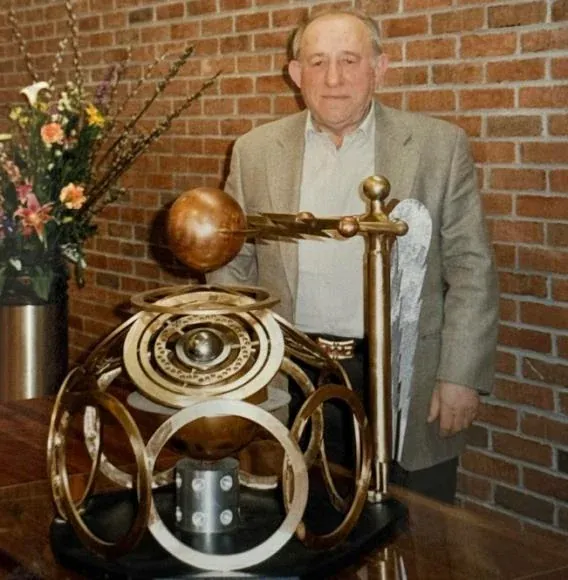
A life, remembered.
These chapters combine family memories with collection records. Open a chapter for the longer stories and qualifications; the source notes explain what is still being checked.
01 / After liberation
Beginning again.
Henry survived Nazi brutality and imprisonment in seven camps. His brothers David and Abe also survived the Holocaust, and all three lived into their late nineties. After liberation, he stayed with his brother Abe at the Cinecittà displaced persons camp in Rome. He studied engineering in the city before building a life in the United States.
His educational display labels this portrait “Seven months after liberation, age 21.”
Read the longer story and historical context
Henry (Chaim) Friedman survived Nazi brutality and imprisonment in seven camps, including Mauthausen. His family-preserved educational display identifies his birthplace as Rastenburg, then in Germany and now Kętrzyn, Poland. The source notes explain the unresolved questions about his vital dates. He and his brothers David and Abe survived the Holocaust; their parents did not. In postwar Rome, he stayed with his brother Abe at the Cinecittà displaced persons camp and pursued engineering studies. The technical education he received in postwar Europe became part of the life he would later establish in America.
His daughter recalls that Henry and Abe did clothing work at the camp, including folding clothes, for very little pay. Their brother David moved elsewhere in Italy to seek better-paid work, and the brothers continued to visit one another.
After the war, Henry built a life centered on family, work and creativity. He would go on to marry, work, raise a family, create art, and speak to younger generations about what had happened. His family remembers that education was a way of resisting the Nazis' effort to erase Jewish lives and memory.
View Holocaust, HF–03 ↗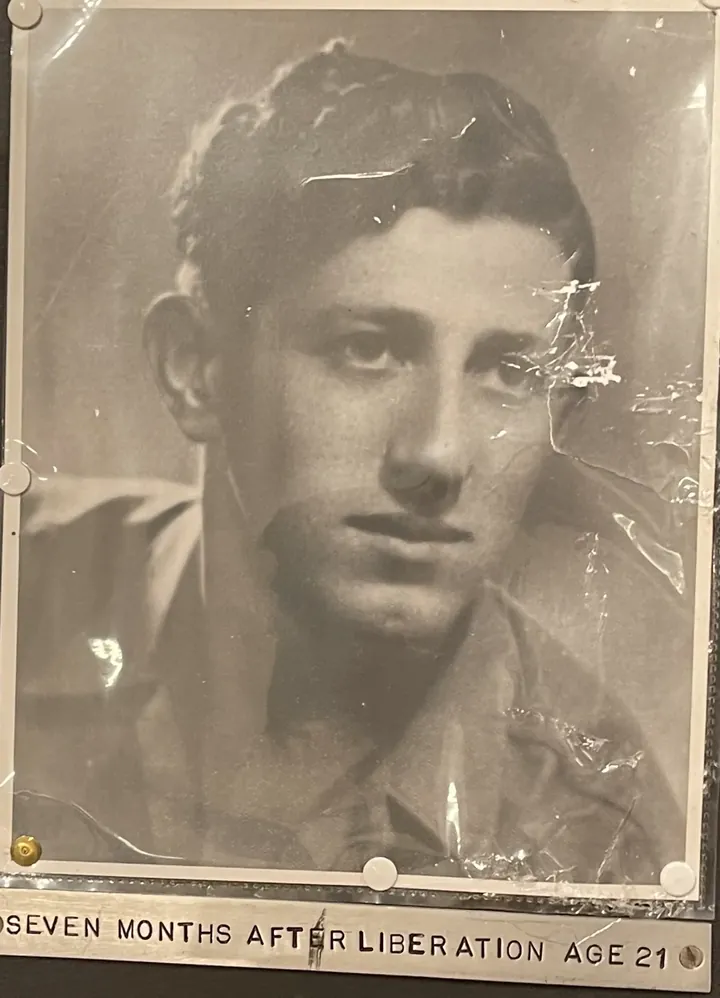
02 / Marriage & family
A life with Bess.
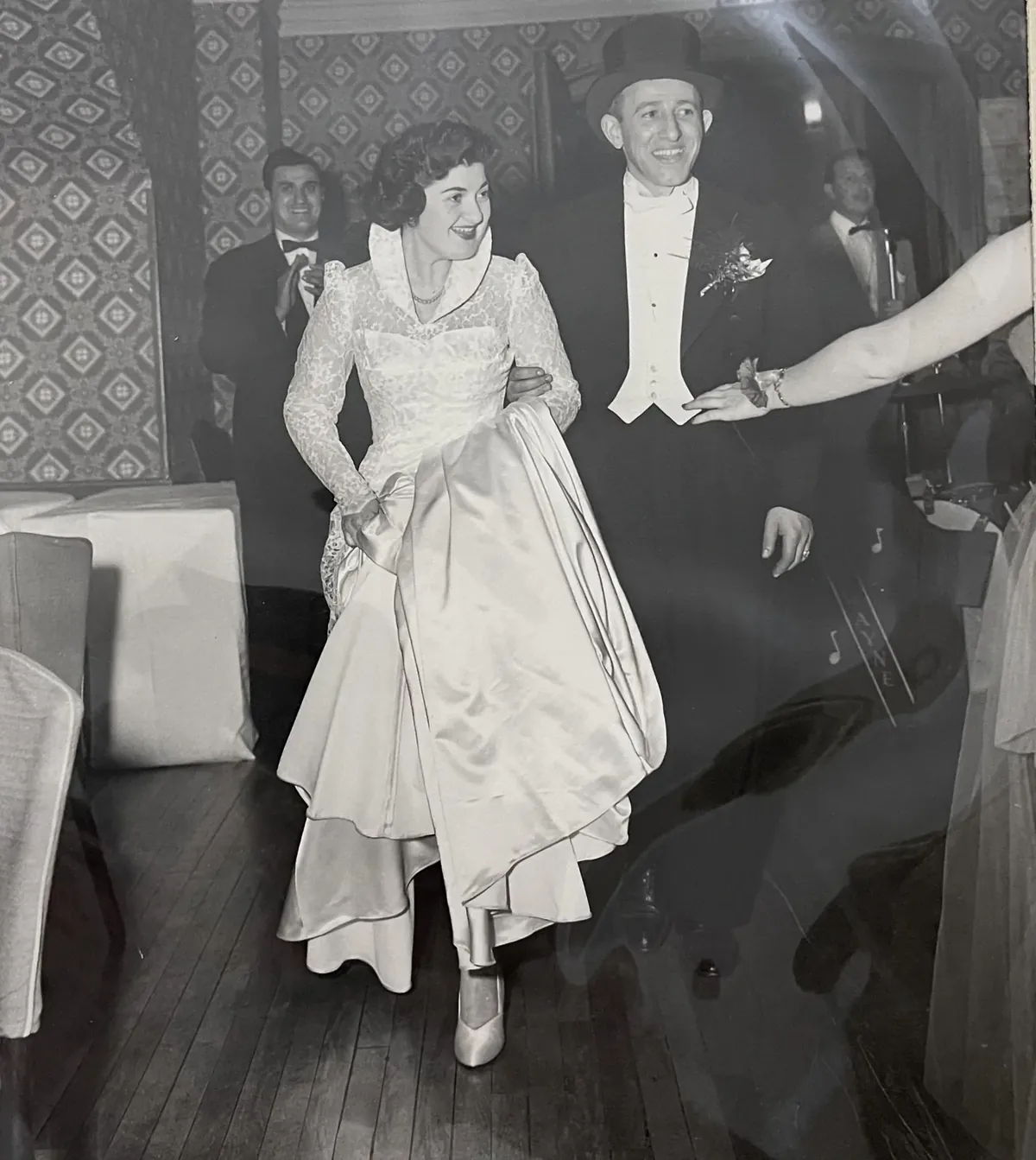
Henry met Bess at a Jewish dance in New York City. His family recalls a marriage of 69½ years, two children and nine grandchildren, with great-grandchildren joining the family later.
They made their home in the Detroit area. Family and friends were central to their lives, with gatherings and everyday conversations bringing them together.
More about Henry and Bess
Henry met Bess at a Jewish dance in New York City. Together they moved to the Detroit area, where Henry sought work in the industrial trades. Their marriage lasted 69½ years, until Bess's passing.
They had two children and nine grandchildren, with great-grandchildren joining the family in later years. Family gatherings mattered to Henry: he enjoyed hearing what everyone was doing and bringing people together. That long marriage and expanding family were as much a part of his legacy as the sculptures he left behind.
Family recollection; the marriage date and Bess's vital records have not yet been supplied.
03 / Work & imagination
Always making something.
Henry spent about 30 years at General Motors, following work in Detroit-area tool-and-die shops. Henry brought the same practical ingenuity to sculpture.
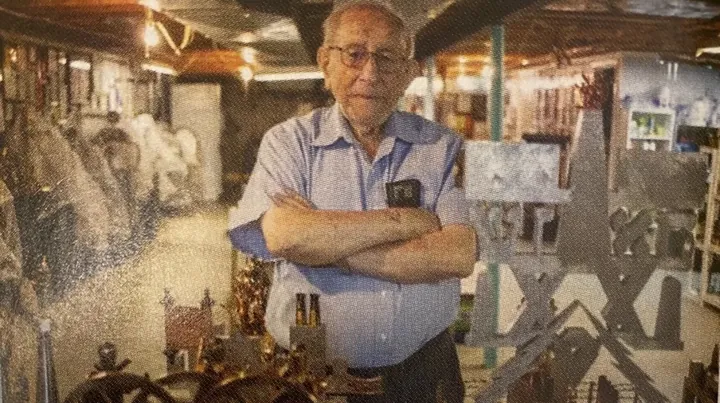
He searched flea markets and junkyards for metal parts, then worked with them in a basement filled with tools, sculptures, clippings and awards. His grandchildren remember a ping-pong table there, too.
Engineering, flea markets and the workshop
A career in engineering
Henry began working in Detroit-area tool-and-die shops before joining General Motors. His family recalls his work in manufacturing automation and robotics-related engineering during a career of about 30 years at GM, bringing technical skill and practical ingenuity to his work.
What his family remembers clearly is his talent with his hands. He understood machinery, components, and the way objects fit together.
That fluency carried into his sculpture, where metal pieces became a vocabulary for memory, faith, invention, and human experience.
View Industrial Still Life ↗Flea markets and found materials
For decades, Henry went to flea markets and junkyards to look for old metal, mechanical parts, and objects other people had passed over. He joked that the flea markets were his “addiction,” his family remembers. The search itself was part of the pleasure.
With an engineer's eye and an artist's imagination, he found new uses for discarded material. Metal could become a biblical scene, a reminder of persecution, a celebration of Jewish life, or a vision of peace.
Inside the workshop
Henry's unfinished basement was both a working studio and a personal gallery. Saws, tools, and machinery shared the space with sculptures, newspaper clippings, certificates, and awards. His grandchildren knew it as a place where they could play ping-pong, too.
His family remembers hand-drawn sketches among his creative materials, though the sequence of sketching, finding materials, and building individual works is not documented. He continued making art long after his working day ended and into retirement. Photographs of surviving notebook pages and paper templates are now available in the drawings and workshop section. Their dates and relationships to individual works remain under research.
04 / Family, service & teaching
“98 years young.”
Henry’s grandson remembers breakfasts at McDonald’s, mall walks and jokes with the people serving his coffee. His family describes a warm, optimistic man who welcomed questions and enjoyed hearing another person’s story.
He volunteered to help older adults at the Brown Center and Fleischman Residence in West Bloomfield, and spoke to students about the Holocaust. He wanted later generations to remember what happened and recognize the dangers of prejudice.
Family memories, volunteering and teaching
Service and community
His family remembers Henry as generous, funny, and deeply welcoming. He loved to talk, to hear another person's story, and to make people feel valued. He was warm and genuine even with people he had just met, often breaking the ice with a little joke. He brought that warmth to volunteering at the Dorothy & Peter Brown Jewish Community Adult Day Program and Fleischman Residence, Jewish Senior Life’s assisted living community. He spent time with program participants and residents and joined them in activities.
A family-preserved announcement names Henry among the 2008 Eight Over Eighty Tikkun Olam Award honorees of Jewish Apartments & Services. The program recognizes older adults whose service embodies tikkun olam, the Jewish commitment to repairing the world.
The announcement supports the family’s recollection of the honor. Read about the record in the family archive.
About the Eight Over Eighty award ↗Teaching the Holocaust
Henry spoke to students and community groups about the Holocaust, sometimes at the Holocaust Center in Farmington Hills. He brought photographs and other materials to help audiences understand his experiences. One especially memorable teaching object was a heavy hammer he had found decades after the war at a garage sale. Its form reminded him of the hammer he had used to break stones during forced labor at Mauthausen.
He would invite a young person to lift the hammer and imagine using a tool of that weight for hours in a quarry. The hammer was not presented as the original object from the camp; it was a later-found example of the type that brought the experience into focus. The family still retains it.
Henry believed the Holocaust must be taught to future generations, including the warning that persecution and mass violence can happen again. His grandson hopes to continue sharing his story through educational talks and exhibitions.
The everyday Henry
Henry called himself “98 years young.” He liked to say you did not become old until you reached 100. His grandson remembers breakfast trips to McDonald's, long walks through the mall, jokes with the people serving his coffee, and the occasional nap during a mall visit.
He was an avid reader of history and often watched the History Channel, especially programs about World War II. Although he did not constantly discuss his wartime experiences at home, he was open to questions. His family remembers a deeply optimistic man who tried to see the good in people and in life.
Language was another part of his remarkable journey. His grandson recalls Yiddish as his primary language, alongside German, some Russian, Italian learned during his postwar years in Italy, and English learned after immigration to the United States.
His family described him as both “a gentleman and a gentle man.”
His hopes for the collection
Henry made sculptures as a creative outlet, but he also wanted them to educate children, grandchildren, and generations he would never meet. He spoke about his experiences so the history of the Holocaust would not be forgotten.
His family recalls that making art and speaking publicly were, in his understanding, ways of getting back at the Nazis—not through violence, but through testimony, creativity, and the continuation of Jewish life.
He was proud of his sculptures and displayed competition ribbons, awards, and newspaper coverage throughout his workshop. He enjoyed showing the work at fairs and exhibitions and talked with his family about the sculptures and what they meant. He generally kept the pieces, setting high asking prices at exhibitions rather than readily parting with them. His 38 sculptures remain in the care of his family. They are being documented for education, research, and possible exhibition, with the hope that the objects will continue the conversations he began.
See all 38 sculptures ↗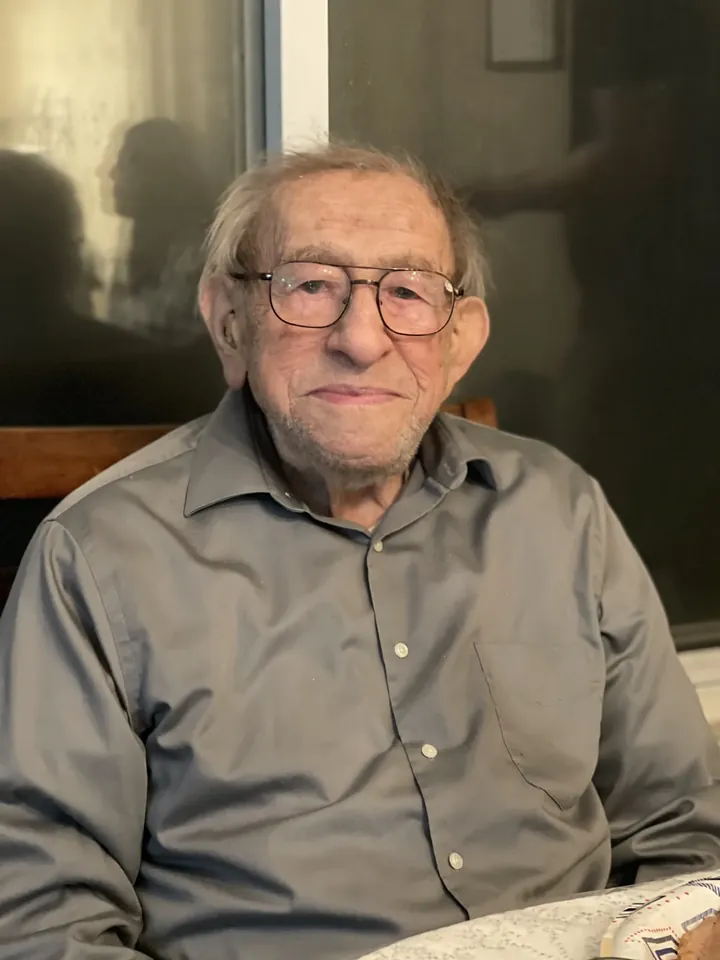
Sources & historical care
The record behind the story.
The account combines family recollections with documented records. Exact dates, employment details and some artwork information remain under verification.
Explore the historical archiveRead the full source notes and open questions
Family oral history, supplied October 2026: Henry and Bess meeting at a Jewish dance in New York City; their 69½-year marriage; his tool-and-die work and General Motors career; his postwar stay with his brother Abe at Cinecittà in Rome; flea-market and junkyard visits; his humor and warmth; his service at the Brown Center and Fleischman Residence; the 2008 Eight Over Eighty honor; his educational motivations; his workshop, sketches, family routines, languages, optimism, and Holocaust teaching demonstration.
Institutional corroboration: Jewish Senior Life identifies the Eight Over Eighty program as the Tikkun Olam Award and documents Fleischman Residence and the Brown Center. These sources confirm the organizations and the program, not Henry's individual involvement or award year. Eight Over Eighty ↗ Volunteer opportunities ↗
Collection records: The family's sculpture inventory and exhibition dossier document 38 works, their photographs, and available measurements. Individual sculpture dates and some dimensions need reconciliation.
New archival evidence: A family-held display records March 23, 1924 as Henry’s birth date and May 5, 1945 as his liberation date, lists Krosno and Rzeszów as ghettos and seven additional wartime locations, and labels two portraits as four and seven months after liberation. A 1993 exhibition program, a 2009 Hillel Day School letter, a 2010 arts newsletter, and published Holocaust Center coverage add documentary context. Read transcriptions and source notes ↗
Outstanding verification: Bess's marriage and vital dates; a family-recalled Holocaust Center exhibition around 2017–2018 and Jewish News coverage; other exhibition records; the dates and object matches of surviving sketches; and possible recordings of Henry's talks.
This is a family-stewarded research edition. Biographical interpretations are not direct quotations from Henry unless explicitly identified as family recollections.
38 works.
More than one lifetime of meaning.
Henry Friedman died on . His legacy lives on through his sculptures, his story, and the people who continue to share them.
Explore the sculptures ↗